
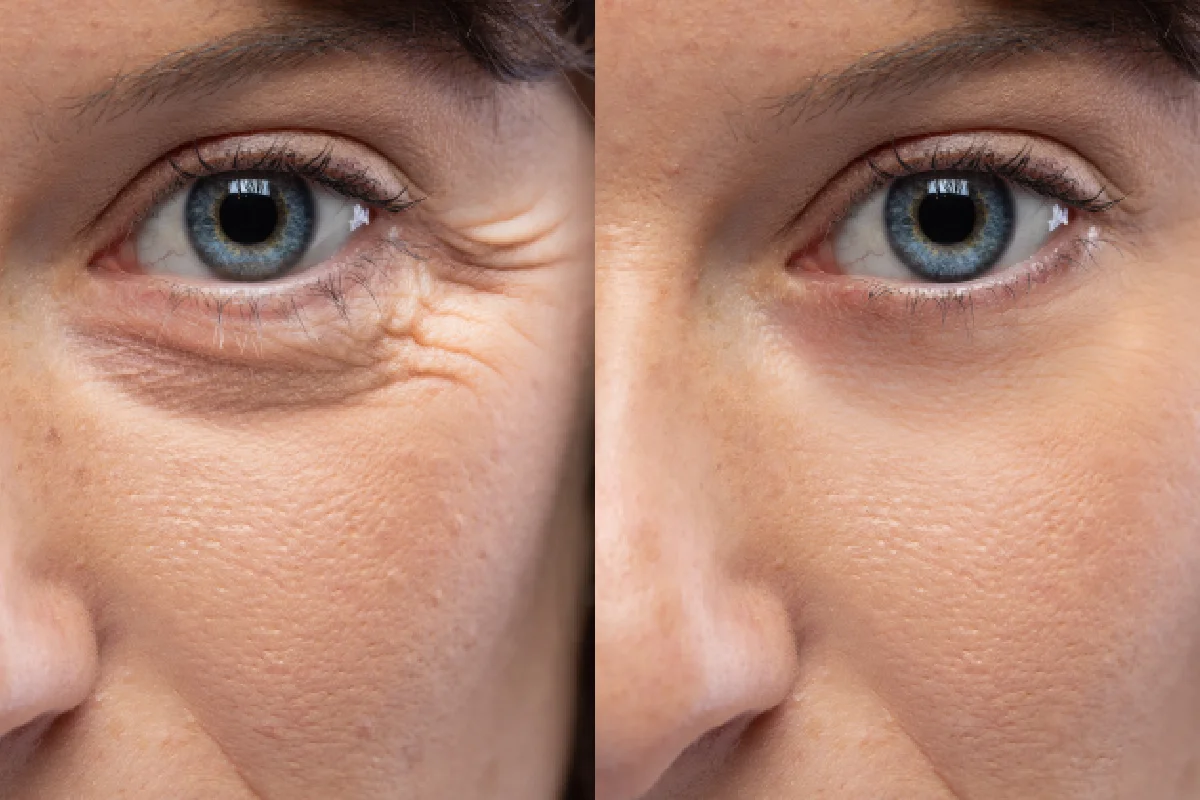
That fan of fine lines at the outer corners of the eyes is one of the earliest signs of facial aging, and it comes from the same everyday expressions that make your face yours. At Hush Aesthetics in Kent, WA, patients often ask how a few small injections can soften those lines without changing the way they look.
Botox is the most common answer, and understanding how it works makes the decision much easier. Here is what actually happens beneath the skin when Botox smooths crows' feet and other facial lines.
Botox relaxes the small muscles that pull the skin into a crease when you smile or squint, so the skin above them stays flatter and smoother. Over time, limiting that repeated folding helps keep mild lines from deepening into permanent ones.
Crows' feet form because the muscle around your eye folds the same skin thousands of times. Every time you smile, laugh, or squint, the orbicularis oculi, the ring of muscle circling the eye, contracts and creates that familiar fan of lines at the outer corner.
When you are younger, skin bounces back the moment your face relaxes. As collagen and elastin decline with age, those folds start to linger a little longer each time, until they become visible even at rest. This is the same process behind forehead lines and the frown lines between the brows.
Everyday habits speed it along. Sun exposure breaks down collagen faster, and squinting in bright light adds even more repetition. This is why sun protection and early attention to expression lines both make a difference in how skin ages.
Botox works by relaxing the muscle underneath a line so the skin on top stops creasing. The product is a purified form of botulinum toxin type A, a neurotoxin used in very small, targeted amounts for cosmetic treatment.
Nerves normally send a chemical signal called acetylcholine to tell a muscle to contract. Botox blocks that signal at the injection site, so the treated muscle relaxes instead of tightening. A relaxed muscle no longer tugs the overlying skin into a fold, and the line above it softens.
Botox only affects the specific muscles it is injected into, and the results wear off gradually as normal muscle activity returns. A skilled injector uses just enough to soften movement while leaving your natural expressions intact. That balance, softening the line without erasing your ability to express, is what separates a natural result from an overdone one.
Botox treats dynamic lines, the ones that appear when your face moves. Facial lines fall into two broad types, and knowing the difference explains what Botox can and cannot smooth.
Dynamic lines (clinically, dynamic rhytides) show up with movement such as smiling, squinting, or frowning. These are Botox’s main target, and crows' feet, forehead lines, and the frown lines between the brows are all classic examples.
Static lines sit on the face even when it is completely at rest. These are usually treated with dermal filler or skin resurfacing rather than Botox, because they are no longer driven by muscle movement alone.
Many lines are a mix of both, which is why results vary from person to person. Botox tends to do the most for lines caught early, while they are still mostly dynamic and have not yet etched into the skin. For deeper static lines, your provider at Hush Aesthetics may suggest combining Botox with another treatment for a smoother result.
Botox can slow the formation of new lines by limiting the repeated folding that creates them. When a muscle moves less often, the skin above it has fewer chances to crease, so mild lines are less likely to deepen into permanent ones over time.
This is why some patients start Botox injections for facial aging earlier, when lines only appear with expression and have not yet settled in at rest. Starting earlier does not stop aging, and it will not freeze your face in time. What it can do is slow the progression of certain expression lines, so they stay softer for longer.
As with any cosmetic treatment, results vary based on your skin, your muscle strength, and how consistently you maintain treatment. Most patients notice their lines look softer within a few days to a week, with the full effect settling over about two weeks. To hold those results, most people return for maintenance treatments a few times a year as the effect gradually wears off.
Botox softens lines caused by muscle movement, but it does not do everything, and honest expectations lead to better results. Here is where it has limits:
Knowing these limits is part of good care. A thorough consultation is how your provider matches the right treatment, or combination of treatments, to what you actually want to change. For smoothing visible eye wrinkles and fine lines, Botox is often one piece of a larger plan rather than the whole answer.
Botox smooths crows' feet and facial lines by quieting the muscle movement that creases the skin, and by slowing how quickly those lines deepen over the years. It is a targeted, temporary treatment that works best as part of a plan built around your face and your goals.
For anyone considering corws' feet treatment in Kent, WA, the team at Hush Aesthetics can explain what Botox can and cannot do for reducing crows' feet and expression lines and help you decide what fits.
Schedule your Botox appointment today.